
About scallabouche
Scallabouche began as a theatre company in Budapest in 1998, creating original work through devising, adaptation and improvisation. Over more than twenty-five years, that practice has gradually moved from stage to screen, but the principle behind the work has remained surprisingly consistent:
we are interested in discovering the story rather than simply executing one we already know.
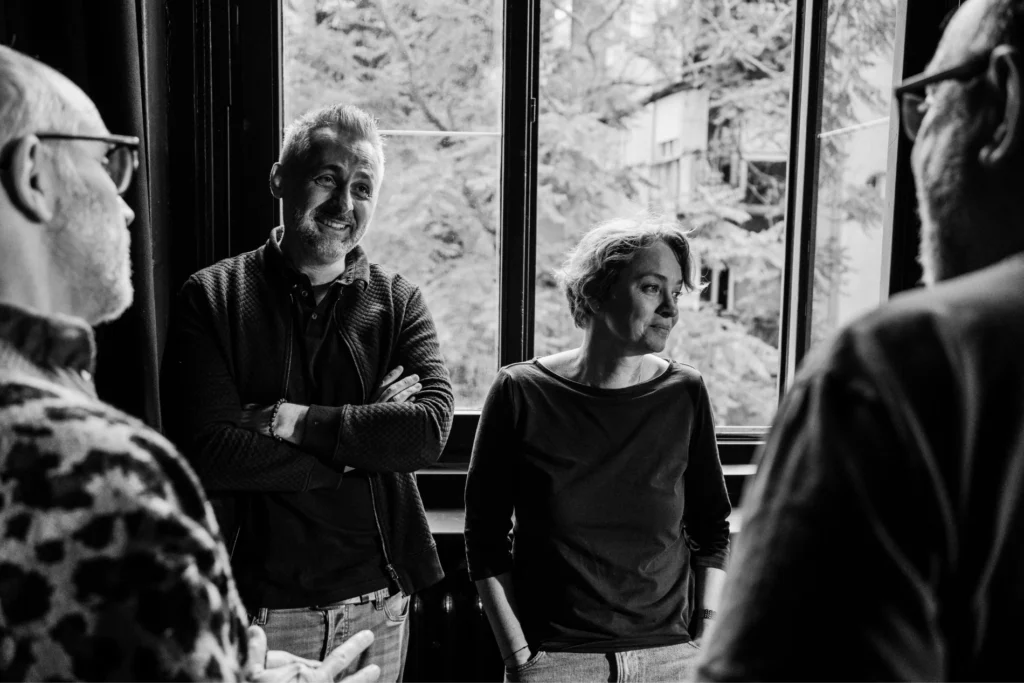
Our films develop through a continual conversation between writing, rehearsal and improvisation. We may begin with a character, a situation, a space or a question. We create enough structure for actors to enter the world, then allow performance to reveal things we could not have discovered at a desk.
Characters contradict our expectations. Scenes move in unexpected directions. Something apparently insignificant can suddenly become central to the story.
We don’t want actors to demonstrate an idea we have already decided upon. We want to create situations in which contradictory human behaviour can emerge.
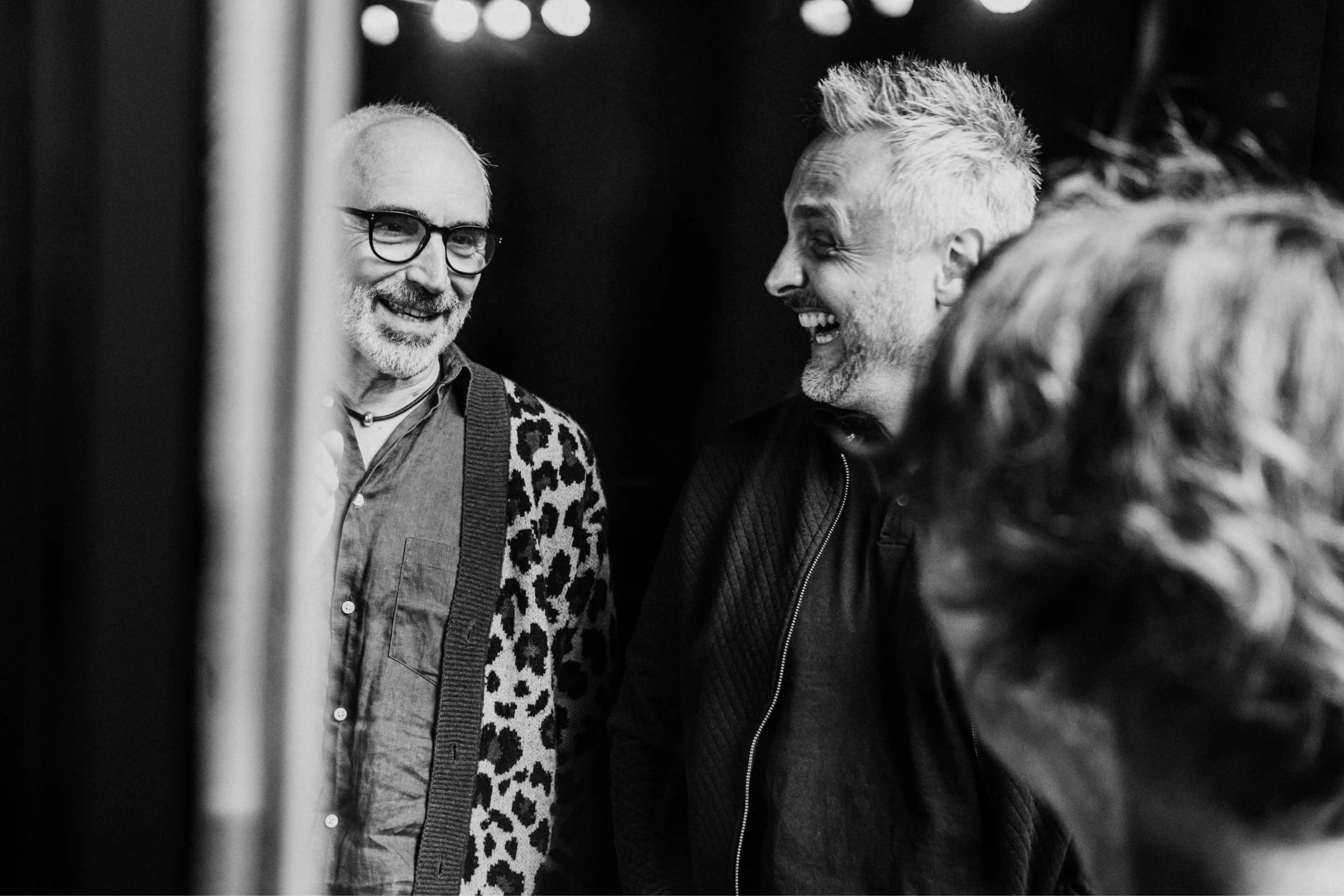
GIVING THE AUDIENCE A ROLE
The same principle shapes our relationship with the audience.
We don’t believe everything in a film needs to be explained. Ambiguity, restriction and missing information can give an audience something to do.
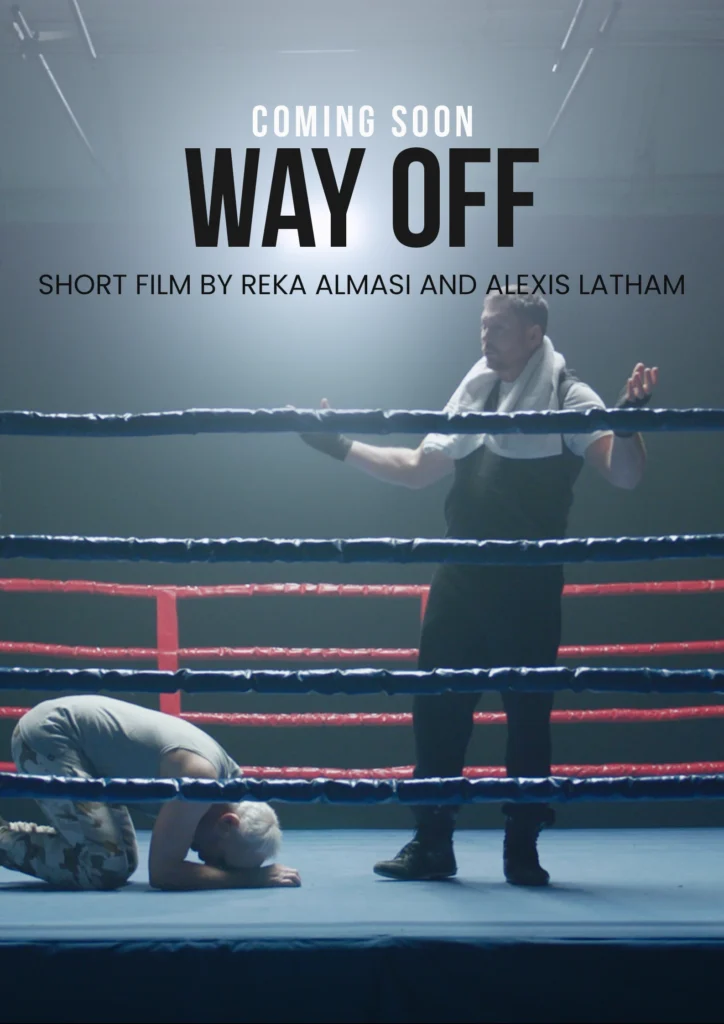
Our films often place characters in confined spaces where their ability to act is limited: a car, a hospital corridor, a boxing ring. The camera can restrict what the audience knows just as the space restricts the characters.
This invites us to judge people and then reconsider those judgements; to make connections; to notice patterns; and sometimes to sit with questions the film refuses to answer for us.
We are less interested in telling an audience what to think than in creating the conditions in which they can discover something for themselves.
FROM SHORT FILM TO FEATURE
In 2023 we began another experiment.
Could we improvise our way from a short film to a feature in something like the way a long-form improvisation develops?
Could we begin with a character and a situation, discover something, leave it behind, introduce something apparently disconnected and then allow those different worlds to collide until a larger story began to reveal itself?
That experiment has become The Ways of…
Over several years we have followed the same character, Eliot, through a series of interconnected films and spaces. Each film was developed with its own identity rather than simply being produced as one section of a predetermined feature.
Gradually, patterns began to return. Characters and questions acquired meanings we had not originally anticipated. What initially appeared to be separate stories began to reveal a larger journey.
Three of the four interconnected films have now been made. The final part is currently being developed in response to what the previous films have taught us.
And somewhere along the way, the process of making the film began to mirror the story we were telling.
Eliot has spent much of his life believing that keeping possibilities open is a form of freedom. Our filmmaking process has also depended upon remaining open to possibility — but eventually both filmmaker and character face the same challenge:
at some point, possibility has to become direction.
That is where The Ways of… is now.
As filmmakers working in Hungary under a highly restrictive, authoritarian regime, we strive to create free, independent art—stories that question, reflect, and provoke thought. In a country where state-sponsored cultural projects are expected to conform to the ideals of the ruling powers, our work exists as an act of resistance—a voice of personal freedom and reflection.
Ultimately, we are interested in finding producers and other partners to collaborate in this journey and co-create films that speak to our shared human experiences, telling stories that resonate across borders and cultures, and offering our audience the space to reflect, dream, and imagine freely. Our films are a meditation on the passage of time, the personal intersection of histories, and the delicate balance between the ideals of youth and the realities of adulthood.